

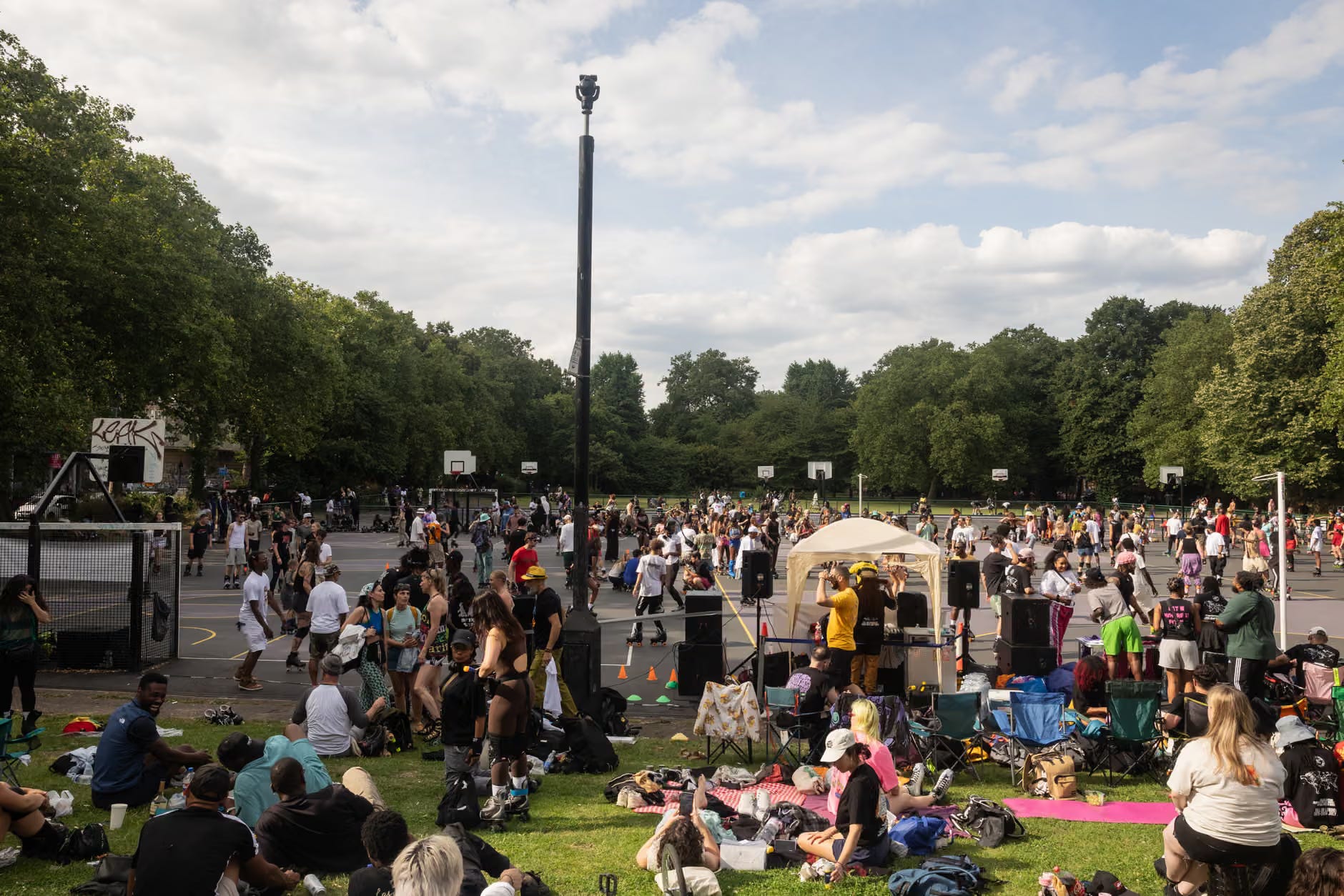
The crashing sound of wheels and bearings flying down smooth concrete. The thumping bass of garage and jungle tracks vibrates against the walls of modernist skyscrapers. The screams as people fall off their skates for the first time.
These are the sights and sounds of East London, where, as youth clubs and community spaces disappear, a new generation of young people are finding community and rebellion through roller-skating.
A recent survey of 2,000 UK adults by Crown Paints found that over a third of people feel there aren’t enough local community spaces, despite 81% saying such spaces are vital for connecting people.
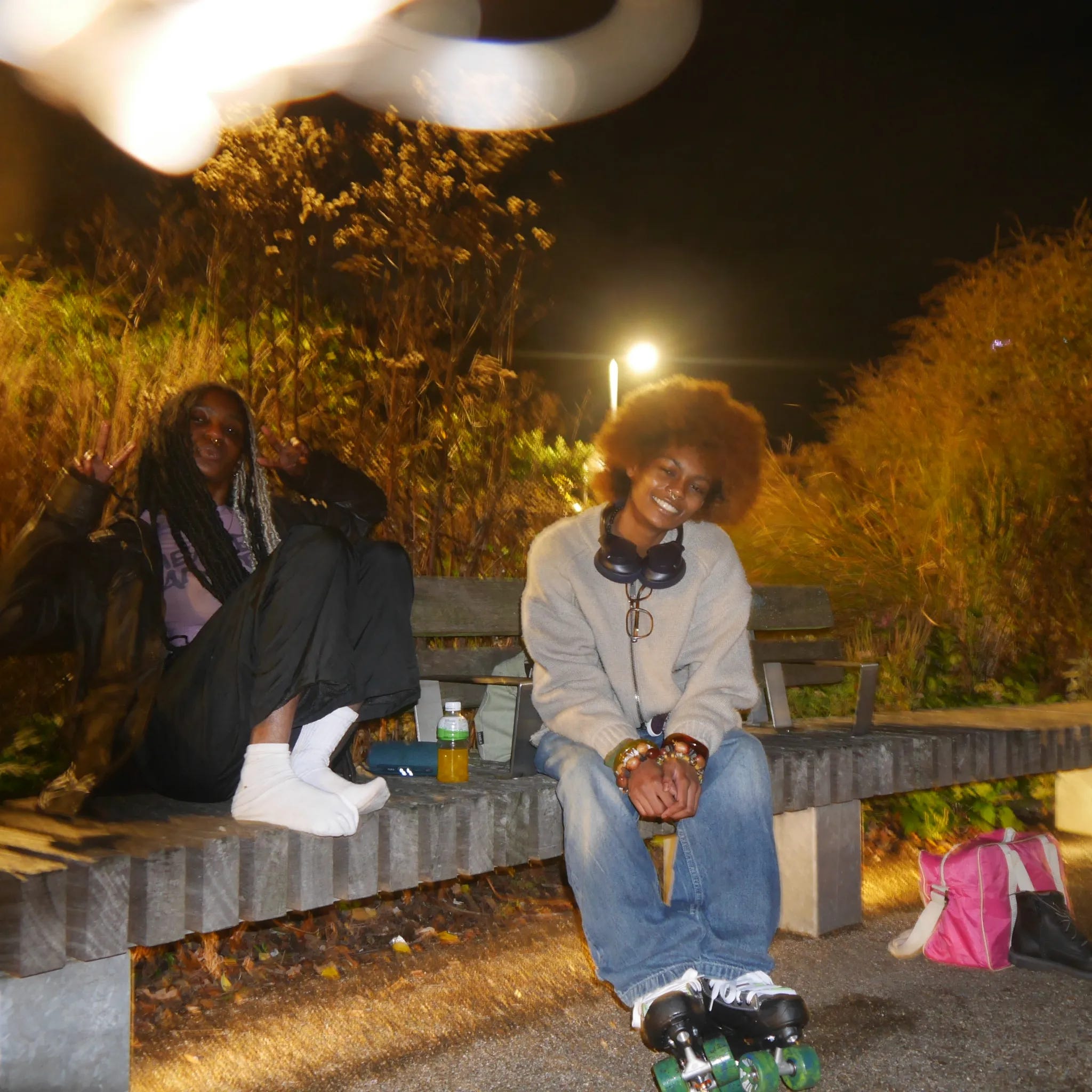
“It’s more about music, the vibe, the drinks, the company, and then the skating comes after it.” Kemi Oke, a 20-year-old jewellery maker and skater living in Hackney, explains playing with her ginger afro.
“So that’s why it’s easy to make friends, because you end up liking people for who they are.”
It’s a community that looks past the things that people cannot change - where societal, racial and economic barriers fall.
“True skaters won’t judge you as well. When you fall, they’ll laugh at you, but it’s because they’re going to hold your hand and pick you back up.”
Roller skating is built on support, where access to parks and streets is all that’s required, and roller skates can be shared between friends.
Oke has found a community in roller skating and wants to share it. “More people should roller-skate. It’s also exercise - keeps you healthy, keeps your body going. Everyone’s doing it, right? Everyone’s just doing it.”
Riding gives young people the ability to connect with a supportive community for little to no cost in a time when community centres and public spaces are increasingly being lost.
Oke’s friend Dee Catherine, a 19-year-old Tottenham local and PPE student, is someone who sees skating as political.
“I personally feel like skating is more like a working-class thing”, Catherine tells me with her socks out after lending her skates to her Kemi.
“People use skating as a mode of transport to get everywhere now. Not everyone can afford a car…sometimes it’s better than bumping the train.”
For young people, not paying high train fares or skating where they shouldn’t isn’t just a statement; it’s reality. Skating like graffiti is an expression in a city which overlooks them.
“I read something about them talking about it being a rebellion… people who skate where you’re not allowed. It’s like a mirror of what the working class are doing-some revolutionary shit.”
By putting eight wheels on rooftop car parks, basketball courts, or places where they aren’t wanted, young people are discovering community, connection, and ways to express themselves in a city that often forgets about them.